
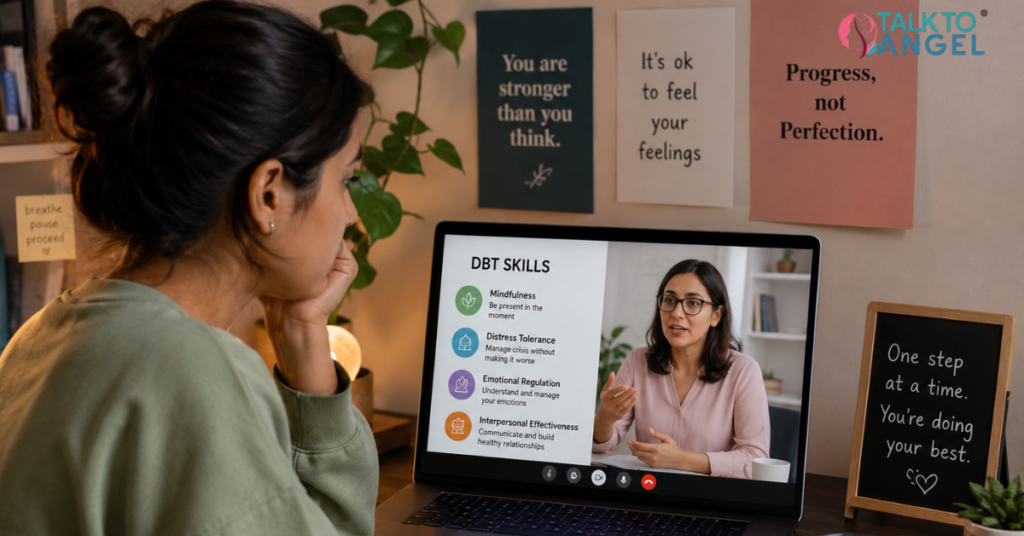
Unable to Calm Your Mind During Emotional Crises? Online DBT Can Help
Have you ever felt like your emotions take over so quickly that you cannot think clearly, communicate calmly, or make balanced decisions? During emotional crises, even small situations can suddenly feel overwhelming. Stress, relationship conflicts, workplace pressure, loneliness, or unresolved emotional pain may trigger intense emotional reactions that leave you feeling mentally exhausted. Many people struggle silently, believing they are simply “too emotional” or unable to cope.
However, emotional dysregulation is not a personal failure—it is often a sign that you need healthier coping strategies and professional support. This is where online DBT therapy can make a meaningful difference. With structured guidance, emotional regulation techniques, and practical coping tools, online DBT therapy helps individuals regain emotional balance and respond to stressful situations more calmly and effectively.
Why Do I Lose Control of My Emotions During Stressful Situations?
Emotional crises often occur when the mind becomes overloaded with stress, fear, anger, sadness, or anxiety. During these moments, the brain reacts impulsively rather than logically. You may experience emotional outbursts, panic, crying spells, withdrawal, or even self-destructive thoughts.
Several factors can contribute to emotional instability, including:
- Childhood emotional neglect or trauma
- Chronic stress or burnout
- Anxiety and depression
- Relationship conflicts
- Fear of rejection or abandonment
- Poor coping mechanisms
- Unresolved emotional pain
When emotions become too intense, many people struggle to calm themselves. This is why DBT for emotional crisis has become one of the most effective therapeutic approaches for people experiencing emotional overwhelm.
Why Do Small Problems Trigger Intense Emotional Reactions in Me?
Sometimes, the reaction is not only about the present situation. Small triggers may activate deeper emotional wounds from past experiences. For example, a minor disagreement may trigger fears of abandonment, criticism, or rejection.
People experiencing emotional sensitivity often:
- Overthink situations
- React impulsively
- Feel emotionally drained after conflicts
- Experience mood swings
- Struggle with emotional control
- Find it difficult to calm down once upset
Learning DBT skills for emotional control can help individuals recognize emotional triggers before reactions become overwhelming. DBT teaches practical techniques to slow emotional responses and improve emotional resilience.
Can Online DBT Therapy Help with Emotional Crises?
Yes, online DBT therapy is highly effective for people struggling with emotional crises, emotional instability, and overwhelming stress. Online DBT focuses on helping individuals understand, manage, and regulate intense emotions in healthier ways.
Through Dialectical Behaviour Therapy online, individuals learn how to:
- Handle emotional distress without impulsive reactions
- Improve communication skills
- Reduce emotional sensitivity
- Build healthier coping strategies
- Manage anxiety and emotional overwhelm
- Develop mindfulness and self-awareness
Online therapy also provides flexibility and accessibility. People can receive professional support from the comfort of their homes, making it easier to maintain consistency in therapy sessions.
Many individuals seeking online help for emotional crises prefer online DBT because it offers structured emotional support while fitting into busy lifestyles.
What Are the Best DBT Techniques for Calming Intense Emotions?
One of the strengths of DBT is that it provides practical coping tools for emotional regulation. Some of the most effective DBT skills for emotional control include:
Mindfulness Techniques
Mindfulness helps individuals stay connected to the present moment instead of becoming consumed by emotional distress. It encourages awareness without judgment.
Simple mindfulness practices include:
- Deep breathing exercises
- Body scanning
- Observing thoughts calmly
- Grounding exercises
Mindfulness reduces emotional impulsivity and helps create mental clarity during stressful situations.
Distress Tolerance Skills
Distress tolerance techniques help individuals survive emotional crises without reacting impulsively. These skills are especially helpful during moments of panic, anger, or emotional breakdown.
Examples include:
- Using cold water to calm the nervous system
- Practicing paced breathing
- Distraction techniques
- Self-soothing activities
These techniques are central to DBT for emotional crisis because they help individuals regain emotional stability during intense situations.
Emotional Regulation Skills
Emotional regulation teaches individuals how emotions work and how to manage them more effectively.
This may include:
- Identifying emotional triggers
- Challenging negative thought patterns
- Improving sleep and self-care
- Building healthy routines
Through emotional healing through DBT, people learn to respond thoughtfully rather than react impulsively.
Interpersonal Effectiveness Skills
Many emotional crises happen during conflicts or communication breakdowns. Online DBT teaches healthier communication strategies that improve relationships and reduce emotional stress.
These skills help individuals:
- Set healthy boundaries
- Express emotions calmly
- Handle disagreements effectively
- Reduce relationship anxiety
How Does Emotional Healing Through DBT Improve Daily Life?
Consistent therapy can significantly improve emotional wellbeing and overall quality of life. Over time, emotional healing through DBT helps individuals feel more emotionally balanced, self-aware, and confident.
Benefits may include:
- Better emotional stability
- Improved stress management
- Reduced anxiety and emotional overwhelm
- Healthier relationships
- Increased self-confidence
- Improved decision-making abilities
- Greater emotional resilience
Online DBT is not about suppressing emotions. Instead, it teaches people how to experience emotions without becoming controlled by them.
How Can You Find the Best Online DBT Therapist in India?
Choosing the best online DBT therapist in India involves looking for qualified mental health professionals who specialize in emotional regulation, crisis management, and DBT-based interventions.
When selecting a therapist, consider:
- Professional qualifications and experience
- Expertise in DBT techniques
- Comfort and communication style
- Availability of online sessions
- Personalized treatment approach
Professional support can make a major difference in helping individuals manage emotional crises effectively and build long-term emotional strength.
Platforms like TalktoAngel provide access to experienced mental health professionals offering structured online counselling services. Individuals looking for the best mental health wellness clinic in Delhi may also explore the Psychowellness Center for emotional wellness support and therapy services.
Why Is Emotional Crisis Management Important for Mental Wellbeing?
Ignoring emotional struggles can eventually affect relationships, work performance, physical health, and overall mental wellbeing. Effective emotional crisis management helps individuals respond to stress more calmly and prevent emotional situations from escalating.
Seeking professional support early can:
- Prevent emotional burnout
- Improve coping abilities
- Strengthen emotional resilience
- Reduce feelings of helplessness
- Improve mental clarity during stress
With the right therapeutic support and coping tools, emotional crises become more manageable over time.
Final Thoughts
Emotional crises can feel overwhelming, but they do not have to control your life. Online DBT therapy helps manage intense emotions, reduce emotional reactivity, and build resilience. Whether you struggle with stress, anxiety, or relationship conflicts, DBT offers practical coping tools. Finding it hard to manage relationships? DBT also improves interpersonal skills by helping you communicate calmly and set healthy boundaries.
By learning effective DBT skills for emotional control, individuals can gradually respond to difficult situations with greater calmness, awareness, and confidence. Seeking online help for emotional crises is not a sign of weakness—it is a step toward emotional growth, healing, and stability.